Essay
Read It and Weep,
Ceci n’est pas une pipe:
AI, Suffering and the Human Soul
I Write with AI, Sue Me!
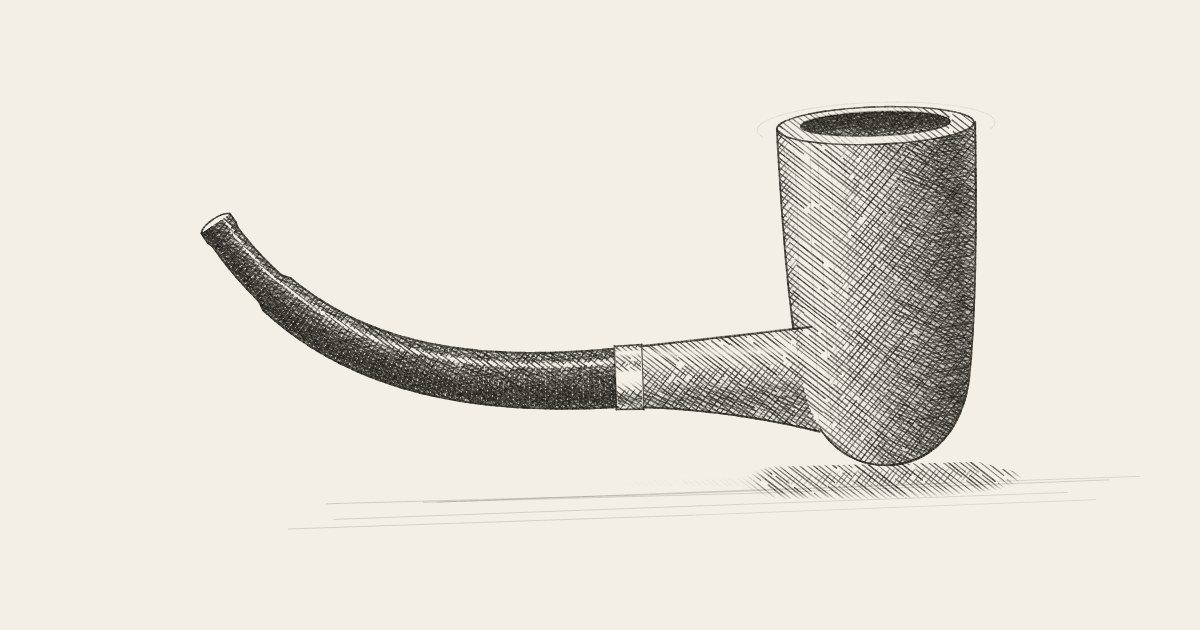
An art critic once accused James McNeill Whistler of flinging a pot of paint in the public’s face. Whistler sued him for libel.
The critic was John Ruskin, one of Victorian England’s most influential voices in art, and the supposed assault was a painting called Nocturne in Black and Gold: The Falling Rocket. Ruskin thought Whistler had some nerve charging two hundred guineas for it.
As the story goes, Whistler was asked during the trial how he could charge that much for a painting that took him only a couple of days to complete. He explained that the price wasn’t for two days’ labor. It was for the knowledge of a lifetime.
It’s a magnificent answer. Particularly if you’ve ever worked as a freelancer.
And it raises a question we’ve been arguing about for centuries without ever quite resolving: What, exactly, are we paying for when we pay for art? The materials? The skill? The imagination? The extraordinary audacity of asking someone for two hundred guineas in the first place?
Most of us understand Whistler’s argument intuitively. We admire musicians who make difficult passages sound effortless. We don’t demand that an excellent surgeon spend an extra few hours operating on us to demonstrate sufficient dedication to the craft. Generally, when someone is extraordinarily good at something, we’re delighted when they can do it quickly.
Yet when it comes to art, we have a peculiar attachment to the idea that it ought to be difficult.
And preferably a little miserable.
We love a suffering artist.
We make documentaries about their suffering. We write biographies detailing their suffering. We make movies about their suffering, then give the actors awards for how much they suffered portraying it.
Leonardo DiCaprio finally won his Oscar for The Revenant, a film whose publicity seemed almost as preoccupied with the conditions of its production as with the performance itself. The freezing temperatures. The punishing wilderness. The raw bison liver. The famously unpleasant bear attack, which was thankfully accomplished with considerably more visual effects than actual bears.
I’m not suggesting DiCaprio didn’t deserve the Oscar. I’m sure the experience was awful, and I’ve never had to eat raw bison liver for anything, let alone a job. But somewhere along the way, the physical ordeal became almost inseparable from the artistic achievement. We knew he’d worked hard because we’d heard so much about how miserable he’d been.
We have a whole mythology built around this idea. Hemingway drank and fought and loved disastrously and wrestled with his demons, and somehow all that suffering produced some of the most celebrated prose in American literature. Van Gogh’s mental illness has become so entwined with the popular understanding of his paintings that it’s sometimes difficult to tell whether people admire the work or the tragedy of the man who made it.
There’s something almost comforting about these stories, isn’t there?
Because suffering is something we understand. We know what it feels like to struggle, to sacrifice, to work toward something that matters terribly to us. Extraordinary creative ability is a considerably stranger proposition. It’s much easier to imagine that Hemingway became Hemingway because he was willing to suffer for his writing than to confront the possibility that he possessed an imaginative gift most of us simply don’t have.
Perhaps we could have written The Sun Also Rises, too. We just weren’t prepared to destroy our livers and several marriages to get there. Alas, we’ll have to settle for being reasonably well-adjusted.
I don’t mean to suggest that suffering has nothing to do with art. Pain is part of being human, and some of the most moving things ever created have come from people trying to make sense of it. Dedication matters, too. So does discipline, and the willingness to keep working at something long after it has stopped being fun.
But there are plenty of people who’ve suffered tremendously without producing a masterpiece, and plenty of masterpieces made by people who were having the time of their lives.
I wonder if what we really find comforting about the tortured-genius mythology is that it gives us a way to explain something we otherwise find almost impossible to understand. We can picture someone hunched over a manuscript for ten years. We can imagine the sacrifices, the rejection letters, the heartbreak. If someone cared enough to endure all that, surely something of themselves must have made it into the work.
We cannot look into an artist’s soul. So we look for receipts.
I think this explains at least part of what makes artificial intelligence so unsettling.
We’ve spent our lives developing certain assumptions about what creative accomplishments require. A beautiful painting must have demanded considerable artistic skill. A polished novel must represent an enormous investment of labor. A compelling piece of music must have required practice, experimentation, and a fairly expensive relationship with a musical instrument. And above all, time.
Then along comes a technology that can produce something resembling those accomplishments in seconds, and suddenly our usual ways of evaluating them don’t seem to work anymore.
We look at something beautiful and wonder whether anyone actually did anything to make it.
I understand the impulse. I’ve had it myself. I’m a writer, and I’ve spent a considerable portion of my career getting better at something a computer can now produce a recognizable imitation of before I’ve finished making coffee. It’s an odd feeling, discovering that the world has invented a shortcut through something you’ve spent years learning to do the long way.
But the more time I’ve spent working with AI, the less convinced I’ve become that the shortcut is really the interesting part.
I wrote recently about discovering that I could use AI to start making things I didn’t already know how to make. Instead of asking how it could help me do my existing work faster, I started wondering what I might be capable of making that I wouldn’t otherwise have attempted.
And that led me to a question I haven’t been able to stop thinking about.
Alan Turing’s famous test asks, essentially, whether a machine can communicate so convincingly that a human being mistakes it for another human. It’s an ingenious question, and one that occupied our collective imagination for a very long time.
But what if we turned it around?
What can you use this technology to make that others can’t?
Give a thousand people access to the same AI system. Same capabilities, same interface, same astonishing collection of technological powers. Are they all going to make the same things?
Of course not. Some will produce generic images, derivative stories, and videos of celebrities doing things that would probably horrify their publicists. Others will use those same capabilities to create things that could only have come from their particular imaginations.
And that difference doesn’t necessarily have anything to do with how many prompts they typed, how many hours they spent refining the results, or whether they personally understand the mathematics behind the software they’re using. It has to do with what they bring to the process. Their taste, their curiosity, their sense of humor, their obsessions, their ability to recognize something extraordinary in a result that someone else might have discarded.
Whistler wasn’t arguing that his brushstrokes were worth two hundred guineas. He was arguing that knowing what to do with them was.
This feels like a much better test of creative accomplishment than measuring the amount of labor involved. But there’s still something bothering me about it.
Because doing something nobody else could do isn’t necessarily the same thing as making something anybody else will care about.
Originality can be impressive. It can also be completely pointless. And some of the things that move us most deeply aren’t especially original at all. A love song doesn’t need to invent a new emotion. A comedy doesn’t need to discover an embarrassment no human being has previously experienced.
Yet certain works reach us in a way others don’t. They make us laugh, or cry, or recognize something about ourselves that we’d never quite known how to articulate.
What is it that makes that happen?
Oddly enough, one of the best explanations I’ve encountered came from a former CIA officer.
John Kiriakou once told a story about introducing an intelligence source he’d recruited to one of his superiors.
During a break in the meeting, Kiriakou and the source fell into a conversation about Broadway shows and soccer. They were both genuinely interested in these things, and apparently had quite a lot to say about them. The conversation went on and on, as conversations do when two people enjoy talking to each other.
Afterward, Kiriakou’s boss pulled him aside and told him that this was why he was good at his job.
Think about that for a moment. This was a professional intelligence officer whose work involved persuading people to betray secrets, sometimes at enormous personal risk. And what impressed his superior wasn’t an ingenious deception, a masterful interrogation, or some dazzling display of psychological manipulation.
It was his ability to connect with another human being.
Which makes a surprising amount of sense when you consider what espionage actually involves. Forget the gadgets, secret codes, and car chases, as much as I personally wish they were the whole job. You’re trying to convince another person to do something they once might have considered unthinkable. To get there, you have to understand what they want, what frightens them, how they see themselves, and what they might be willing to risk for somebody they trust.
And the strange thing is, the relationship doesn’t necessarily become fake just because one person is keeping a secret.
Kiriakou really did like talking about theater and soccer. His source really did enjoy the conversation. Whatever else was happening between them, that connection was real, even if the circumstances surrounding it were deceptive and the ultimate objective might have been morally indefensible.
I find this fascinating because it suggests that sincerity and deception aren’t quite the opposites we imagine them to be. A genuine human connection can exist within something invented.
Actors understand this better than almost anyone. They spend their careers pretending to be people who don’t exist, experiencing things that never happened, in places that may not exist outside a Hollywood soundstage. And somehow, if they’re good enough, they’ll make you feel something more real than almost anything that happened to you that day.
Michael Douglas once recalled being told something early in his acting career that stuck with him: “The camera can always tell when you’re lying.”
What a remarkable piece of advice for a profession built entirely around pretending.
But that’s the trick, isn’t it? The circumstances can be fictional. The characters can be invented. An actor can be standing in front of a green screen pretending to watch the end of the world, and still make you believe every second of it.
Because the emotion has to come from somewhere real.
You can’t fake it.
I’m going to make an argument here that may cost me some credibility with people who own extensive Criterion Collection libraries.
I think there’s genuine artistic value in Fast & Furious.
Yes, the franchise in which increasingly muscular men perform acts of automotive physics that would make Isaac Newton reconsider his life’s work.
Beneath the explosions, the spectacularly implausible stunts, and Vin Diesel’s apparently bottomless capacity to deliver speeches about family, there’s something remarkably sincere about what these movies care about. Loyalty, friendship, belonging, the people you’d do something completely unreasonable to protect.
The movies are ridiculous, but they’re not embarrassed by their feelings. They aren’t winking at the audience to let us know that everybody involved is secretly above this nonsense. They really do care about these characters and their relationships, and somehow, despite everything involving the laws of physics, audiences have spent decades caring about them, too.
I think that’s worth taking seriously, because we tend to associate vulnerability in art with anguish or confession. The artist exposing some terrible personal wound, the novelist exploring the darkest corners of the human condition, the singer pouring heartbreak into a microphone. And certainly, there’s vulnerability in all of that.
But there’s vulnerability in joy, too. In enthusiasm. In being earnestly, unapologetically excited about something, even when other people might find it ridiculous.
Star Wars is another wonderful example. George Lucas borrowed enthusiastically from mythology, samurai films, and old adventure serials, then asked us to believe in an invisible spiritual force connecting all living things, the moral significance of hope, and the possibility that even Darth Vader might still be capable of love.
These are enormous, deeply earnest ideas dressed up in a story about space wizards. And they’re part of what makes those films so beloved.
There’s a risk in showing someone what you genuinely love. You’re giving them an opportunity to laugh at you, to reject your taste, or to decide that something deeply important to you is stupid. Depending on the person, admitting that you sincerely believe a man jumping a supercar between skyscrapers is one of the coolest things ever committed to film might require considerably more courage than talking about your heartbreak.
I think that’s part of what we mean when we talk about an artist putting their soul into something. It doesn’t necessarily mean they’ve revealed some intimate autobiographical truth. Sometimes the work is almost entirely invented. But somewhere in the things they’ve chosen to celebrate, the moments they’ve found beautiful or funny or devastating, we begin to recognize the presence of another person.
Someone who means it.
And sometimes we recognize something of ourselves in them, even when their experience of the world is completely different from our own.
Vulnerability is art. Art is vulnerability.
Not because every creative act requires suffering, or because every artist owes the audience some terrible personal confession. But because the moment you make something that expresses what you genuinely believe, love, fear, or find beautiful, you’re inviting other people to decide what they think of you.
And if you manage to make them feel something of what you felt, you’ve accomplished something extraordinary.
Consider a piano.
A piano is a machine. An extraordinarily sophisticated one, actually. Press a key, and an intricate system of levers and hammers turns the movement of your finger into vibrating strings. Yet nobody listening to Chopin worries that the machinery has somehow contaminated the music.
We hear the composer. We hear the pianist. And if they’re good enough, something passes between them and us that we might struggle to put into words.
Something human.
The piano doesn’t get in the way of that exchange. It makes it possible.
But there’s another human presence in that music, one we almost never think about. The people who invented the instrument. Who imagined sounds they couldn’t yet make, and set about building something that could make them. Their imagination is in there, too. The piano isn’t just a means of human expression. It’s an expression of humanity in its own right.
And it isn’t alone. A camera is a machine. So is a printing press. So is the recording equipment that captured your favorite singer’s voice, and the speaker through which you eventually heard it.
Art has never existed in opposition to technology. Some of our greatest art exists because someone wanted to invent a better way to share what was in their soul.
There’s something peculiar about how readily we accept collaborative authorship in almost every creative field, provided artificial intelligence isn’t involved.
Nobody objects to calling Jaws a Steven Spielberg movie because Spielberg didn’t personally operate every camera, compose the score, build the shark, or edit every frame. We understand what he brought to the production, just as we understand that filmmaking is an enormous collaborative undertaking involving hundreds of talented people.
Rembrandt worked in a studio with assistants and students. Novelists work with editors. Musicians work with producers, arrangers, engineers, and other musicians. Sometimes those collaborators make contributions so substantial that the question of who deserves credit becomes genuinely complicated. Sometimes they don’t get nearly enough credit, either.
But the involvement of other people doesn’t automatically diminish the value of an individual’s creative vision. In many cases, it’s precisely what makes realizing that vision possible.
And I don’t see why that principle should suddenly disappear when one of the collaborators is a machine.
I use AI in my own writing. Sometimes I ask it to help me organize an idea that has gotten away from me. Sometimes I ask it to challenge an argument, suggest a different approach, or help me figure out why a passage isn’t working. Occasionally it gives me something so aggressively mediocre that I’m briefly offended on behalf of the English language.
But I’ve also had experiences where it helped me discover an idea I hadn’t quite known how to articulate, or recognize a connection I might never have made on my own.
And I think there’s something wonderful about that.
I don’t believe the value of my writing comes from having personally typed every word without assistance. The value, insofar as there is any, comes from the perspective I’m trying to share. The things I’ve experienced, the connections I’ve made, the questions I can’t stop asking, and my attempts to make those things meaningful to somebody who hasn’t spent nearly as much time inside my head as I have.
If a machine helps me find a clearer way to express something I believe, I don’t see why that should make the belief any less mine. If an editor helps me recognize that a paragraph is confusing, I don’t assume they’ve stolen my soul. And if somebody has an extraordinary creative vision but lacks the technical ability or financial resources to execute every part of it, I think it’s wonderful that we might be developing tools that give them a chance to try.
That doesn’t mean every AI-generated work is good, or that every use of these technologies is ethical. Questions about consent, ownership, credit, and the livelihoods of working artists are important, and the answers won’t always be flattering to the companies building these systems.
But I don’t think we need to pretend that everything touched by AI is artistically worthless in order to take those concerns seriously.
Nor do I think there’s anything particularly admirable about producing something entirely generic by hand.
The machine can help you express what you have to say. It can also help you produce an extraordinary amount of material without ever having anything to say in the first place. Anyone who’s spent much time reading AI-generated content will recognize the distinction.